Manual vs Automated EOB Processing: Error Rate Comparison
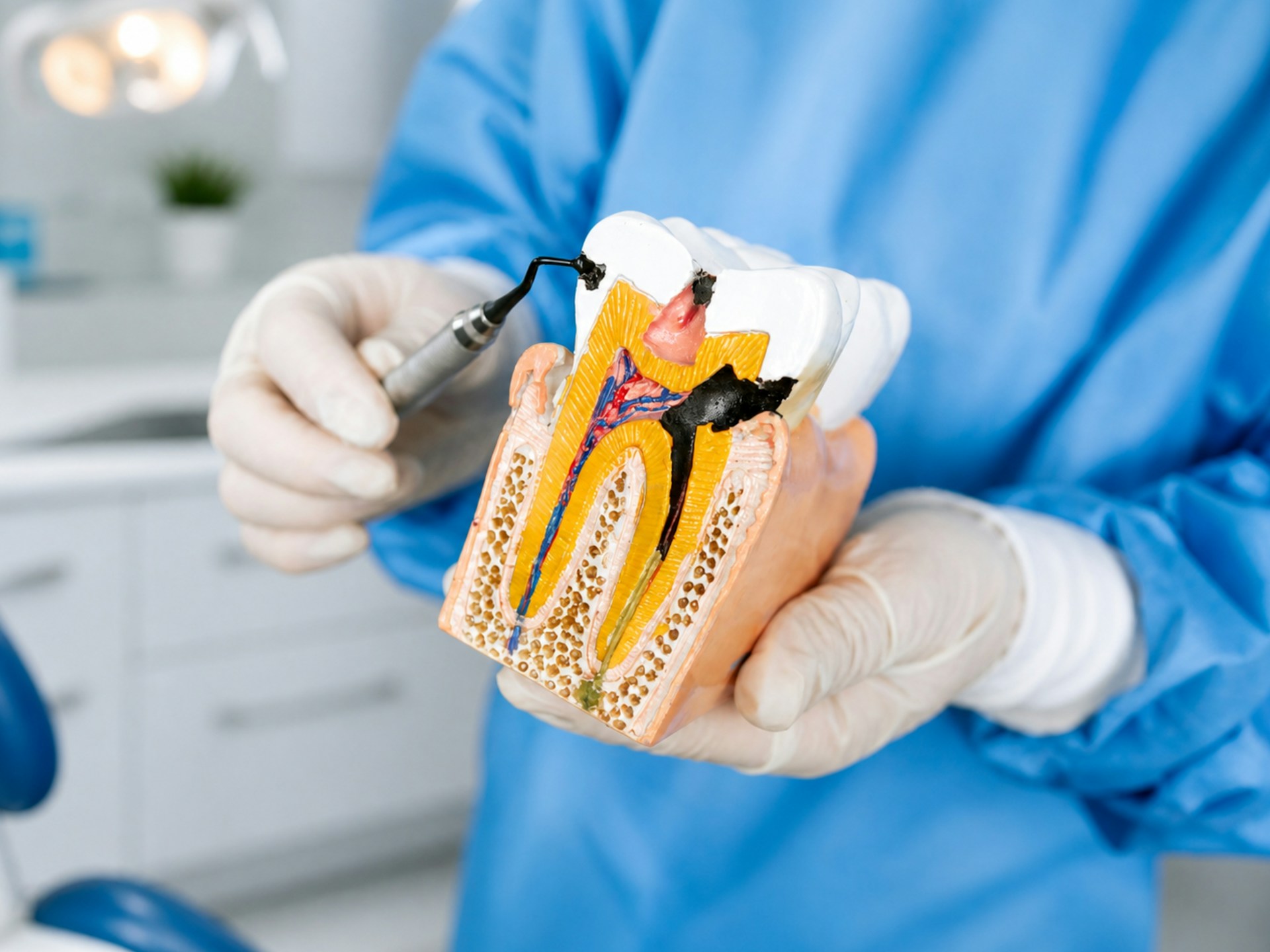
The best dental practices in 2026 have eliminated manual EOB posting. The manual vs automated EOB processing error rate is the reason: industry vendor data suggests manual EOB processing error rates can be 4–6x higher than automated systems like Arini. For practices posting 200 claims monthly, that gap produces significant billing errors every month, each compounding into denied claims, delayed AR days, and revenue that never reaches your bank account.
If your dental billing team is still posting EOB payments by hand, you're absorbing revenue losses that rarely surface as clear line items. Miskeyed dollar amounts, misapplied adjustment codes, and unverified payments post quietly — and by the time the financial impact shows up in your AR days or denial rate, the errors have already compounded across weeks of claim activity.
For practices processing hundreds of claims monthly, the cost of manual EOB errors extends well beyond the rework time. It shows up in cash flow that stays frozen, revenue that never arrives, and billing staff capacity consumed by data entry instead of the appeals and patient collections work that actually requires human judgment.
When it comes to the manual vs automated EOB processing error rate debate, industry data from automated billing vendors suggests manual EOB processing error rates in the 8–12% range, compared to under 2% for automated systems. For a dental practice processing hundreds of claims every month, that gap translates directly into denied claims, delayed reimbursements, and cash flow that stalls before it arrives.
Here's how manual and automated EOB processing compare across every dimension that matters — and why the shift to automation has become the defining characteristic of every high-performing dental revenue cycle in 2026.
Industry estimates suggest manual EOB processing error rates of 8–12% and average AR days of 45–65. Automated processing significantly reduces errors and drives AR days toward the 25–35 day industry benchmark. For most dental practices, the gap represents tens of thousands in annual recovered revenue.
Key Takeaways
- Around 80% of dental practices experience financial concerns tied to coding errors and insurance denials, per Outsource Strategies International.
- Dental practices on manual billing workflows average 45–65 AR days; automation drives this toward the 25–35 day best-practice benchmark.
- Top-performing automated practices achieve a 98% clean claim rate — versus the ~92% national average clean claim rate (ADA benchmark).
- Arini's dental billing automation integrates natively with OpenDental, EagleSoft, and Denticon, enabling automated EOB posting without workflow disruption.
Why Dental Practices Are Switching to EOB Automation
Manual EOB workflows made sense when claim volumes were low and paper-based billing was the industry standard. As practices grow — and as insurance payers have added complexity to claim adjudication — the manual model increasingly breaks under its own weight.
The pressure points driving the shift:
- Error rates compound at scale. If manual error rates are in the commonly cited 8–12% industry range, a practice processing 200 claims per month generates 16–24 billing errors each month — each requiring staff time to rework, often against expiring appeal windows.
- AR days reflect the processing delay. Practices on manual billing typically run 45–65 AR days. Every day above the 35-day benchmark represents cash locked in the billing cycle, unavailable for operations or growth.
- Staff capacity is consumed by data entry. Manual EOB posting absorbs 17–40 staff hours per month for a mid-volume practice — hours that could be redirected to appeals, complex payer disputes, and patient-facing collections.
- Underpayments accumulate undetected. Manual posting rarely includes systematic fee schedule verification. Small per-claim variances aggregate into thousands of dollars in silently abandoned revenue over a fiscal year.
What Is EOB Processing in Dental Billing?
An Explanation of Benefits (EOB) is the document an insurance carrier sends after adjudicating a dental claim. It details what the insurer paid, what contractual adjustments were applied, and what balance — if any — remains the patient's responsibility.
EOB processing refers to the end-to-end administrative workflow of:
- Receiving EOBs — either as paper mail or as Electronic Remittance Advice (ERA) files
- Matching each payment to the correct patient account in the practice management system (PMS)
- Posting the payment and all applicable adjustments
- Identifying underpayments, denials, or contractual discrepancies
- Triggering patient balance billing for any remaining patient-responsible amount
When done manually, this workflow involves a billing specialist reading paper EOBs line by line, entering amounts by hand, and applying adjustment codes to each procedure. When automated, software reads ERA data and applies it directly to the PMS — with zero manual keystrokes for standard claims.
Manual EOB Processing: Where Errors Enter the Workflow
Manual EOB processing creates multiple compounding failure points across the billing cycle — from transcription errors to systematic underpayment blind spots that silently compound revenue loss.
Transcription errors are the most common source of inaccuracy. Billing staff miskey dollar amounts, apply the wrong adjustment code, or post a payment to the wrong patient account. Industry data indicates baseline error rates of 1–5% for straightforward claims — but multi-procedure claims, coordination-of-benefits situations, and high-volume days push real-world error rates significantly higher, with industry estimates suggesting rates can reach 8–12% when downstream effects are factored in.
Paper EOB processing delays compound the problem. Paper documents must be sorted, batched, and manually reviewed before posting can begin. This adds 3–7 business days to the reimbursement cycle — during which that revenue sits uncollected and your AR days creep higher.
Cognitive fatigue at scale is a factor that rarely appears in billing audits but is consistently present in practices with high claim volume. A billing team processing 150+ EOBs per day operates under sustained cognitive load that increases transcription errors as the day progresses. Automated systems have no equivalent fatigue curve.
Underpayment blind spots represent some of the most invisible revenue leakage in manual workflows. Manual posting rarely includes systematic verification that the insurer paid the contracted rate. Underpayments get posted, accepted, and forgotten. Over a fiscal year, these small per-claim variances aggregate into tens of thousands of dollars in quietly abandoned revenue.
According to 2740 Consulting, the national average claim collection rate is only 84% annually — well below the 98% benchmark achieved by top-performing practices.
Pros
- No software implementation required — usable from day one
- Suitable for practices with highly customized, non-standard billing arrangements outside ERA/EDI formats
- Full staff visibility and control over every posting decision
Cons
- Elevated error rates on standard claim volumes, rising with multi-procedure complexity and daily volume
- 17–40 staff hours consumed by data entry per month at mid-volume practices
- Paper EOBs add 3–7 business days to the payment posting cycle
- Underpayments typically go undetected without systematic fee schedule verification
- Scales linearly — claim volume growth requires proportional headcount growth
Best For
Practices processing fewer than 30–50 claims per month, or those with highly customized billing arrangements that fall outside standard ERA/EDI formats.
Pricing
A fully loaded billing FTE runs $75,000–$100,000+ annually (salary, benefits, payroll taxes, training, PTO coverage), plus $1,750–$5,850 per month in denial rework costs for a practice generating 50+ monthly denials.
Automated EOB Processing: How Accuracy Improves
Automated EOB processing works by ingesting ERA files — the electronic equivalent of a paper EOB, delivered via EDI — and posting payments, adjustments, and denials directly into the PMS in seconds.
Unlike manual posting, automated systems are deterministic: they read exact data values from standardized fields, apply contractual fee schedules systematically, and flag any payment that deviates from the expected contracted amount. There are no misread figures, no incorrectly applied adjustment codes, no payments routed to the wrong account.
Key accuracy improvements that automation delivers:
- Contractual rate verification on every claim — each payment is checked against the practice's negotiated fee schedule. Underpayments are flagged before they're posted, not discovered in a year-end audit.
- Automatic denial routing — denied claims are immediately queued for follow-up rather than buried in a processing backlog.
- Faster payment posting — ERA automation eliminates manual data entry, speeds up payment reconciliation, and provides faster access to critical financial information, per Curve Dental.
- Complete audit trail — every posting action is timestamped and logged, supporting HIPAA-compliant record-keeping without additional staff effort.
The outcome: according to dental automation vendor data, automated EOB posting can reduce error rates from the 8–12% manual range to under 2% — an improvement of up to 80% in billing accuracy.
Manual vs Automated EOB Processing Error Rate: Side-by-Side
According to industry estimates, manual EOB processing in dental billing carries error rates of 8–12%, while automated EOB processing reduces errors to under 2% — a 4 to 6x accuracy improvement. This gap stems from transcription mistakes, misapplied adjustment codes, and underpayment blind spots inherent to manual workflows. Automated systems eliminate these error classes by processing deterministic ERA data fields with no manual keystrokes.
The error rate gap is the headline number, but the downstream effects multiply it. For example, if your practice runs a 10% error rate on 200 monthly claims, that means 20 claims per month requiring rework — each consuming staff time, triggering potential appeals, and risking appeal window expiration.
The True Cost of Manual EOB Processing Errors
Error rate is one dimension of the cost equation. The real financial impact flows through four connected channels:
Denial rework costs. Practices on manual billing workflows typically run claim denial rates of 10–15%. Industry data puts the administrative overhead of reworking and resubmitting a denied claim at $35–$117 per claim (DentalAI Assist). For a practice generating 50 denials per month, that's $1,750–$5,850 in direct administrative cost — before accounting for delayed reimbursement or claims that expire past the appeal window.
Revenue leakage from underpayments. Without systematic contractual rate verification built into every posting action, underpayments are accepted and written off. Even small per-claim underpayments, accepted without systematic rate verification, can compound into significant annual revenue leakage.
Frozen cash flow from elevated AR days. Per DentalIntel's revenue cycle analysis, data from 1,355 practices shows that reducing AR by 10 days frees roughly $45,000 in working capital per practice. That capital, currently locked in outstanding receivables, could fund equipment, expansion, or simply reduce practice debt service.
Billing staff turnover costs. High-volume manual EOB posting is cognitively intensive and error-prone. Around 80% of dental practices experience financial concerns associated with coding errors, billing challenges, and insurance denials, per Outsource Strategies International.
Processing Speed: Manual vs Automated EOB
Posting speed matters because faster posting accelerates cash flow and surfaces denials before appeal windows close. The difference between manual and automated is not incremental.
Manual posting benchmarks (from industry analysis of ERA/EOB processing workflows):
- Straightforward single-procedure claims: 3–5 minutes per claim
- Multi-procedure or coordination-of-benefits claims: 8–12 minutes per claim
- Paper EOBs: additional 3–7 days lead time before posting can even begin
Automated posting benchmarks:
- ERA-based posting: seconds per claim, processed in batches
- Paper EOBs with AI extraction: same-day after scan
For a practice receiving 200 EOBs per month, manual posting consumes 17–40 staff hours monthly. Automated systems handle the same volume in under an hour of compute time — freeing your billing team to manage exceptions, handle complex appeals, and support patient-facing billing conversations.
Arini vs. Manual EOB: Full Feature Comparison
Cost Comparison: Manual Billing Staff vs. Arini Automation
The true cost of manual EOB processing:
A dental billing specialist earns $28–$34 per hour on average (Salary.com, 2025). Fully loaded — salary, benefits, payroll taxes, PTO coverage, training — the annual cost runs $75,000–$100,000+ per billing FTE. Practices with high claim volume often require two billing FTEs, bringing total fully loaded cost to $150,000–$200,000+ annually.
Add to this:
- Claim rework overhead: $1,750–$5,850/month for a practice with 50+ monthly denials (at $35–$117/claim per industry data)
- Revenue leakage from underpayments not systematically identified and recovered
- Cash flow opportunity cost of AR days averaging 45+ vs. the 35–40 day benchmark (Pearly.co)
Automated EOB processing with Arini:
Arini's pricing is demo-based and calibrated to practice size and claim volume. The relevant comparison is not platform cost vs. staff salary in isolation — it is total cost of ownership including error rate impact, AR day acceleration, and recovered revenue.
Billing automation case studies across dental practices consistently show ROI from recovered underpayments, reduced denial rework, and AR day improvement that clears platform costs well within the first quarter of deployment. For DSOs and multi-location groups, automation's non-linear scalability makes the economics even more compelling: ten locations do not require ten times the billing staff.
Arini's Strengths for EOB Processing Automation
Arini offers native integrations with OpenDental, EagleSoft, and Denticon alongside systematic underpayment detection, automated eligibility verification, and end-to-end revenue cycle coverage. This purpose-built platform addresses manual EOB processing errors at their structural source. Practices go live in days, not months, and typically drive AR days toward the 25–35 day target benchmark.
Native PMS integration. Arini integrates directly with OpenDental, EagleSoft, and Denticon — the three most widely deployed dental practice management systems. Automated posting happens inside the system your team already uses, eliminating parallel workflows and re-keying.
Eligibility verification before errors can occur. Rather than discovering coverage gaps at claim submission time, Arini verifies insurance eligibility 5–7 days before the appointment. Catching eligibility issues upstream eliminates an entire category of claim denials before they can happen.
End-to-end revenue cycle coverage. Arini handles the complete billing arc: pre-appointment eligibility verification, claim submission support, automated payment posting, denial management, and patient balance billing. This is not a point solution for one step — it is a coherent automation layer across the revenue cycle.
HIPAA-compliant by design. Every patient data access, every posting action, and every data transfer is encrypted and logged. Arini's compliance posture is architectural, not procedural — practices do not need to train staff on new HIPAA protocols to stay compliant.
Real-time practice intelligence. Owners and DSO operators get live visibility into AR days, denial rates, posting velocity, and collections performance. Not a monthly report that's already 30 days stale when it arrives — a live operational dashboard.
Patient-facing speed that protects revenue. When patients call with billing questions, Arini answers in 300ms — faster than a human receptionist can reach the phone. Unified Dental Care reported a 12% revenue increase after deploying Arini, driven in part by improved billing cycle efficiency and eliminated missed calls that previously resulted in abandoned scheduling and collections conversations.
Who Should Choose Arini for Automated EOB Processing
DSOs and multi-location groups are the clearest fit. Manual EOB processing across 5, 10, or 20 locations creates compounding error risk and requires billing headcount that scales linearly with claim volume. Arini's automation scales with volume, not with headcount.
Single-location practices with high claim volume benefit most directly from the error rate reduction. A high-volume practice can expect dozens of billing errors per month under manual processing — each requiring rework, increasing denial risk, and consuming staff time. Automation eliminates the structural cause of those errors.
Practices on OpenDental, EagleSoft, or Denticon get full native PMS integration without custom development work. Arini was built for these systems from the ground up.
Practices with AR days above 40 are leaving measurable cash flow on the table. Automated posting — by eliminating errors and accelerating the posting cycle — typically drives AR days toward the 25–35 day benchmark based on typical implementation patterns.
Practices experiencing billing staff turnover find that removing the highest-volume, most error-prone manual tasks reduces staff burnout and concentrates human billing expertise where it adds real value: complex appeals, payer disputes, and patient-facing collections conversations that require judgment.
When Does Manual EOB Processing Still Make Sense?
Manual EOB processing may be reasonable for practices with very low claim volume — fewer than 30–50 claims per month — where the implementation investment in automation outweighs the immediate benefit. Practices with highly customized, non-standard billing arrangements that fall entirely outside ERA/EDI formats may also require a hybrid approach, using automation for standard claims while managing exceptions manually.
For the overwhelming majority of dental practices — single-location or multi-site, general or specialty — the error rate, cash flow, and cost data favor automation conclusively.
Final Verdict
The right EOB processing approach depends on your practice profile:
- Practices processing 200+ claims per month — automated EOB processing delivers the highest return. Error reduction, AR day improvement, and staff hour recovery all compound at high volume.
- DSOs and multi-location groups — automation is the only model that scales without linear headcount growth. Ten locations do not require ten billing FTEs.
- Practices with AR days above 40 — the revenue recovery case is direct. Per DentalIntel data, reducing AR by 10 days frees roughly $45,000 in working capital per practice.
- Practices with fewer than 30–50 monthly claims — manual workflows may remain viable. Evaluate the implementation investment against the immediate benefit at low claim volume.
For the majority of dental practices — those processing 50+ claims monthly on OpenDental, EagleSoft, or Denticon — the error rate, cash flow, and cost data favor automation conclusively. Automated EOB processing significantly reduces manual data entry errors, drives AR days toward the 25–35 day benchmark, and frees billing staff from routine data entry tasks so they can focus on work that requires judgment.
Book a Demo to see how Arini's automated EOB processing integrates with your practice management system and get a personalized revenue recovery estimate based on your current claims volume and AR days.
Frequently Asked Questions
What is the error rate for manual EOB processing in dental billing?
Industry estimates suggest manual EOB processing in dental practices carries error rates in the 8–12% range when accounting for transcription mistakes, miscoded adjustments, payments posted to wrong accounts, and underpayment oversights. Conservative estimates for basic data entry errors start at 1–5%, but multi-procedure claims and high-volume conditions push real-world rates significantly higher.
How much does automated EOB processing reduce billing errors?
According to dental automation vendor data, automated EOB posting can reduce error rates from the 8–12% manual range to under 2% — a significant improvement in billing accuracy. Because automated systems read deterministic fields from ERA files and apply contractual fee schedules systematically, they eliminate the transcription errors, misapplied codes, and underpayment blind spots that define manual workflows.
What is a good AR days benchmark for dental practices?
Top-performing dental practices maintain AR days of 25–35. Between 35 and 45 is acceptable but improvable. Above 45 indicates that billing workflow issues — including EOB processing errors and posting delays — are actively compressing cash flow. Practices on manual billing typically average 45–65 AR days.
Does Arini's automated EOB processing work with my practice management system?
Arini integrates natively with OpenDental, EagleSoft, and Denticon — the three most widely deployed dental PMS platforms. ERA/EDI-based automation is also compatible with most major dental management systems; native integration depth varies by platform.
How long does it take to see results after automating EOB processing?
Most practices see measurable improvements in AR days within a few billing cycles of deploying automated EOB posting. Error rate and denial rate improvements are visible almost immediately after go-live. Full stabilization to target AR benchmarks (25–35 days) typically occurs within a few months, based on typical implementation patterns.
Is automated EOB processing HIPAA compliant?
Yes. Automated EOB processing through platforms like Arini is built with HIPAA compliance as a foundational requirement. All patient data access is encrypted, logged with timestamps, and stored in alignment with HIPAA Security Rule technical safeguard requirements. In most practices, this represents a compliance improvement over paper-based manual processing workflows.
What is the cost difference between manual and automated dental billing?
Manual EOB processing typically requires 1–2 billing FTEs at a fully loaded annual cost of $75,000–$200,000+, plus ongoing denial rework costs and significant revenue leakage from underpayments. Arini's automated billing platform uses demo-based pricing scaled to practice size — and documented case studies consistently show ROI from recovered revenue that exceeds platform cost within the first quarter of deployment.
What is the difference between EOB and ERA in dental billing?
An Explanation of Benefits (EOB) is the document an insurer sends after adjudicating a claim, detailing payments, adjustments, and patient responsibility — as paper or PDF. An Electronic Remittance Advice (ERA) is the digital equivalent: a standardized EDI file containing the same information in a machine-readable format. ERA enables automated payment posting; paper EOBs require manual data entry or AI extraction to post automatically.
Why does manual EOB processing produce such high error rates?
Manual EOB processing generates elevated error rates — industry estimates suggest 8–12% — because billing staff must interpret documents, apply adjustment codes, and enter dollar amounts by hand. This workflow is inherently prone to transcription errors, cognitive fatigue, and underpayment blind spots. Multi-procedure claims, coordination-of-benefits scenarios, and high daily claim volumes compound these errors, since each additional line item introduces another opportunity for misentry or misclassification.
How quickly does automated EOB posting reduce dental billing errors?
Error rate improvements are visible almost immediately after implementing automated EOB posting, typically within the first one to two billing cycles. Denial rate reductions and clean claim rate improvements typically follow within the first few billing cycles. Full improvement to target AR benchmarks (25–35 day range) takes time as the backlog clears and the system fully stabilizes across all payers.


