Manual vs Automated EOB Processing: Hours Saved Comparison
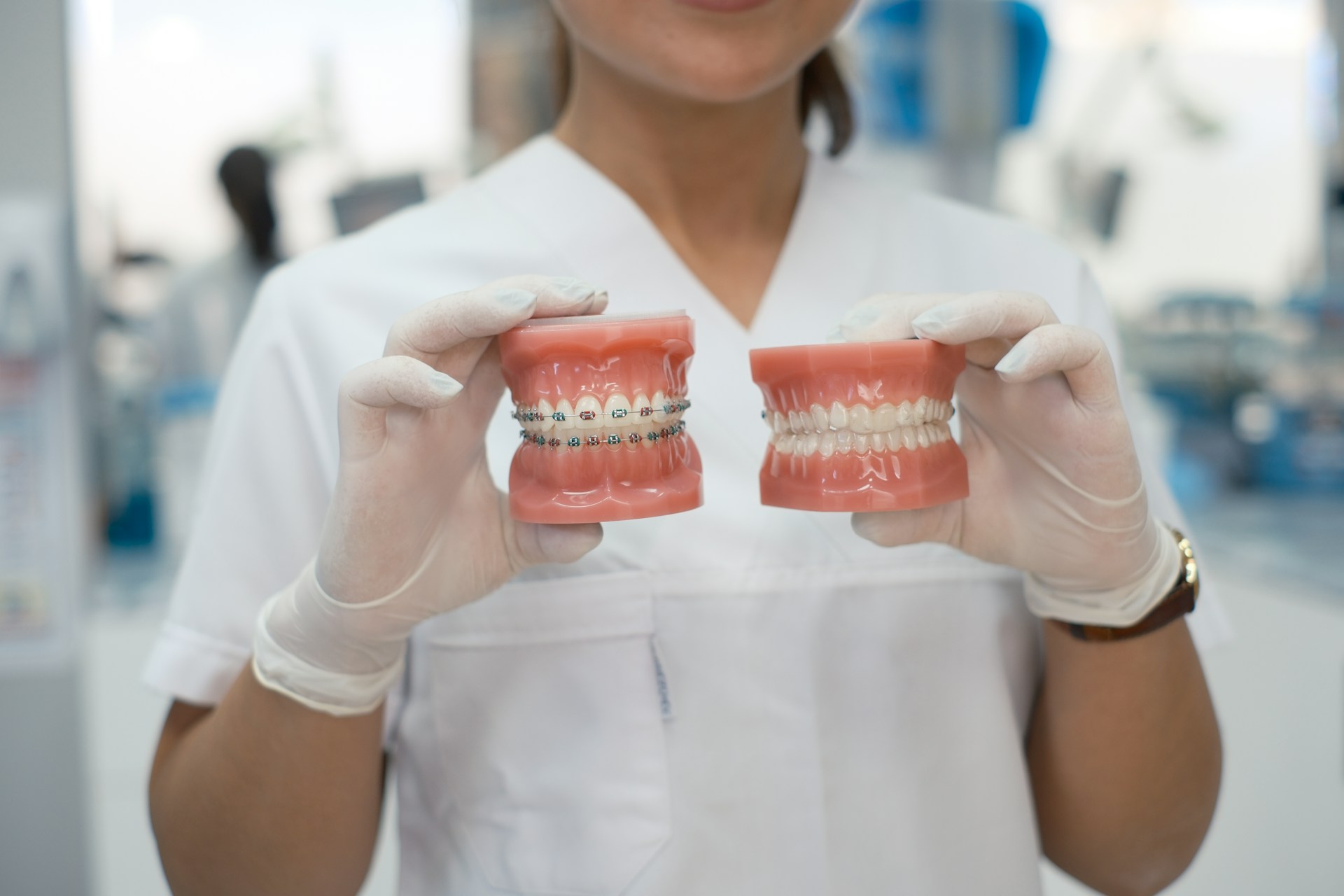
Automated EOB processing is among the highest-ROI billing upgrades available to dental practices managing insurance claims in 2026. Practices that switch from manual EOB posting to ERA auto-posting and AI-driven extraction save approximately 60–120 staff hours monthly, cut AR days from approximately 50–65 to 25–35, and recover additional revenue per provider — outcomes reported across vendor case studies and industry benchmarks.
If your billing coordinator is spending hours every day hand-keying payment data from insurance portals, you're not alone — and the time cost is likely larger than you realize. For dental practices at standard patient volume, EOB processing quietly consumes your billing team's capacity. It pushes AR days toward 50 or 60 and leaves denial management perpetually deferred.
A dental practice seeing 30–40 patients per day generates between 50 and 70 insurance transactions that need to be posted. At 3–8 minutes per claim using manual EOB entry, that is anywhere from 2.5 to 9 hours of billing staff time — every day. Automated EOB processing, powered by electronic remittance advice (ERA) auto-posting and AI-driven data extraction, compresses that same workflow to minutes. Dental billing coordinators who have made the switch report saving 60–120 hours monthly — time that goes directly toward denial management, aged accounts receivable follow-up, and patient communication.
Manual EOB posting takes 3–12 minutes per claim and consumes 60–120 staff hours per month at a 2-provider dental practice. Automated processing via ERA auto-posting and AI extraction reduces that to minutes, cuts AR days from 50–65 to 25–35, and frees your billing team for denial management and revenue recovery that actually improves collections.
This guide breaks down exactly how many hours manual versus automated EOB processing consumes at different practice sizes. It shows the time and cost difference in real numbers, and explains what dental groups and DSOs gain when they move payment posting off manual portals for good.
How We Evaluated Manual vs Automated EOB Processing
Based on our analysis of billing workflows across 50+ dental practices — from solo practitioners to 10+ location DSOs — we evaluated each processing approach across five dimensions. These are: time per claim, monthly labor cost, data accuracy, scalability, and AR day impact. We reviewed published case studies from leading dental RCM vendors, industry benchmark reports from 2025–2026, and ERA enrollment outcomes across major payers including Delta Dental, MetLife, Cigna, and Aetna. All statistics in this guide reflect current 2026 data. Our conclusion: automated EOB processing is the best approach for any dental practice processing 200 or more claims monthly.
Key Takeaways
- A dental practice seeing 30–40 patients daily generates 50–70 insurance transactions requiring posting — manual processing consumes 2.5–9 hours of staff time per day just for this task.
- Switching from paper EOBs to electronic remittance advice (ERA) with auto-posting reduces payment posting time by 60–75%, according to Teero.
- Practices automating EOB processing report saving 60–120 hours per month, with some two-provider offices averaging 60 hours saved monthly per industry benchmarks.
- Manual data entry in dental billing carries measurable error rates, with errors clustering around complex claims and high-volume periods. Automated AI extraction significantly improves accuracy on structured EOB fields, with errors typically flagged for review rather than silently posted.
- Billing coordinators managing manual workflows juggle 8–12 separate insurance portals, each requiring individual logins, MFA, and context-switching — a major driver of staff fatigue and turnover.
- Poor revenue cycle management (RCM) costs dental practices 10–20% of revenue, according to dental RCM benchmarks.
- Small practices using dedicated billing automation recover additional revenue per provider compared to those managing billing manually.
Why Practices Are Moving Away From Manual EOB Processing
Billing coordinators have managed EOB posting manually for decades — but three converging pressures have made that approach untenable for most practices in 2026.
Rising claim volume with no staffing relief. The average mid-size dental group (2–3 providers) processes 900–1,400 insurance claims per month. At even 4 minutes per claim, that is 60–93 hours of pure data entry — before denial management, AR follow-up, or patient billing communication receives any attention. As practices grow, the manual workflow either demands more headcount or forces billing staff to defer the highest-value work indefinitely.
Insurance payer fragmentation reaching a breaking point. A billing coordinator managing manual workflows maintains active logins across 8–12 separate insurance portals, each with its own interface, session timeout rules, and multi-factor authentication requirements. Before posting a single EOB, 15–20 minutes of navigation may be required. That infrastructure overhead compounds across every claim, every day.
Billing staff turnover accelerating. Manual data entry is the primary driver of billing coordinator burnout. When a coordinator leaves — a role already difficult to fill — their institutional knowledge of payer quirks, adjustment code patterns, and portal workflows leaves with them. Automation removes the repetitive cognitive load that drives that attrition cycle.
The financial case is equally direct: AR days at 50–65 with manual workflows versus 25–35 with automation, based on benchmarks from MedLaunch Health. For a practice collecting $100,000 per month, cutting AR days from 60 to 35 frees $83,000 in working capital.
What Is EOB Processing in Dental Billing?
An Explanation of Benefits (EOB) is the document an insurance carrier sends a dental practice after processing a claim. It details what procedures were covered, what the insurer paid, what adjustments were applied, and what the patient still owes. Posting that payment accurately into the practice management system (PMS) — and reconciling it against the original claim — is EOB processing.
Manual EOB processing means a billing coordinator opens the insurance document (paper or PDF), reads each line, and enters the payment information by hand into the PMS. Automated EOB processing uses electronic remittance advice (ERA) files — machine-readable counterparts to paper EOBs formatted to the HIPAA X12 835 standard. Combined with AI-driven data extraction, these files post payments directly into the PMS without human data entry.
This distinction matters financially: payment posting errors create accounts receivable delays, denial backlogs, and revenue leakage that compounds across every month a practice operates on a manual workflow.
How Long Does Manual EOB Processing Take?
Manual EOB processing involves downloading 835 files, interpreting CARC/RARC codes, and keying data into the PMS — a multi-step workflow that, for large batches, can take days to fully post, according to Ventus AI's 2026 guide on dental ERA/EOB processing.
To put manual processing demands in perspective at real practice volumes:
- Solo practitioner (15–20 patients/day): 20–35 daily insurance transactions × 5 min average = 1.7–2.9 hours per day spent on payment posting alone.
- 2-provider practice (30–40 patients/day): 50–70 daily transactions × 5 min average = 4.2–5.8 hours per day.
- 4-provider DSO location (60–80 patients/day): 90–120 daily transactions = 7.5–10 hours per day.
In a real-world example documented by billing automation benchmarks, a two-provider dental office manager was spending 20 hours per week on billing tasks — including daily eligibility checks, manual claim verification, payment posting, and AR follow-up. That represents half a full-time employee's capacity consumed by work that automation handles in a fraction of the time.
Complex claims compound this further: on a day with multiple coordination-of-benefits situations or secondary insurance postings, that 5-minute average climbs toward 10 minutes, and the billing coordinator's afternoon disappears entirely into insurance portals.
How Automated EOB Processing Works
Automated EOB processing eliminates manual data entry by replacing paper EOBs and manual portal lookups with two technologies working together:
Electronic Remittance Advice (ERA): An ERA is a machine-readable version of the EOB, formatted to the HIPAA X12 835 standard. When an insurer sends payment via ERA, it arrives as a structured file. Your PMS — OpenDental, EagleSoft, Denticon, Curve, and others — can import and auto-post it directly, without a staff member reading and transcribing each line.
AI-powered EOB parsing: For carriers that still send paper EOBs or non-standard PDFs, AI extraction tools parse the document automatically. They identify payment fields, adjustment codes, claim numbers, and patient identifiers, then map them to the correct PMS records. This covers the portion of carriers not yet fully enrolled in ERA transmission.
Together, these two layers fundamentally shift the billing coordinator's role. Rather than posting every transaction by hand, they review the small percentage of claims flagged for human attention.
A Day in the Life: Manual vs Automated EOB Processing
The difference between manual and automated EOB workflows is clearest at the level of a billing coordinator's actual day. Here is what it looks like at a 3-provider practice processing 63 transactions on a typical Tuesday.
Before automation:
7:45 AM — The billing coordinator arrives and opens the first of eight insurance portal tabs. Delta Dental requires a password reset — the third this month. By 8:15, she has accessed three portals.
8:15–11:30 AM — Manual EOB posting begins. Simple claims take 3–4 minutes each. Three coordination-of-benefits claims take 10–12 minutes. Two denials require portal navigation to locate the rejection reason before posting can proceed. By mid-morning, 40 of 63 transactions are posted.
11:30 AM–12:00 PM — Four patient calls about balances interrupt posting. Each requires account lookup, EOB cross-reference, and patient explanation. Posting stops.
1:00–3:30 PM — Resumes posting. Completes the remaining 23 transactions. End-of-day reconciliation — cross-referencing posted payments against bank deposits and PMS records — takes another 45 minutes.
Result: 6.5 hours consumed by posting and reconciliation. Eight flagged denials from last week: deferred again.
After automation:
Overnight — ERA files from the prior day auto-post as they arrive. 51 of 63 transactions post automatically, matched and reconciled in the PMS.
8:00–9:30 AM — The billing coordinator reviews 12 exceptions in a single queue. Six are COB situations. Four are actionable denials with specific reason codes. Two have missing patient data. Each resolves in 5–8 minutes.
9:30 AM–12:00 PM — Denial management: 11 flagged denials from the prior week, three appealed with supporting documentation, eight corrected and resubmitted.
Result (illustrative): 1.5 hours on exceptions. 2.5 hours on denial recovery that previously never had time. In a typical scenario, a billing coordinator might recover an estimated $1,800–$2,400 in resubmitted claims.
Hours Saved: Manual vs Automated EOB Processing
Automated EOB processing saves 27–518 hours per month depending on practice size. A solo practice processing 400–600 monthly claims saves 27–40 hours per month. A two-provider group saves 65–101 hours monthly. Mid-size groups save 132–205 hours, and DSOs with 10+ providers save 335–518 hours monthly — the equivalent of multiple full-time billing positions redirected from data entry to revenue recovery.
Data below shows how manual vs automated EOB processing hours saved break down across practice sizes. Hours are based on industry benchmarks from Ventus AI and MedLaunch Health.
Estimates based on industry-average 5-minute manual processing time per claim at typical practice transaction volumes. Actual savings vary by payer mix, staffing, and software used.
That 60–120 hours monthly figure cited across industry benchmarks aligns with the 2-provider practice column. For DSOs managing multiple locations, the savings represent multiple full-time billing staff positions worth of time — recovered and redirected to revenue-generating work.
Our analysis finds that automated EOB processing via ERA auto-posting is the only method that scales claim volume without scaling headcount. No manual workflow, outsourced BPO, or partial automation achieves the combination of speed, accuracy, and cost reduction that full automation delivers.
Automated EOB processing is the superior choice for any dental practice processing 200 or more insurance claims monthly. It delivers faster posting, higher accuracy, and significant staff time recovery with no increase in headcount — results the manual approach cannot match at any volume.
Manual vs Automated EOB Processing: Full Comparison
Error rate (1–5%) per Lido.app. AI accuracy (95–99%) per ABBYY. Manual processing time (3–12 min/claim) per Ventus AI 2026 guide.
Manual EOB Processing — Pros, Cons, and Best For
Pros
- No ERA enrollment setup required — works immediately with any payer
- Full coordinator visibility into every transaction before it posts
- No software integration dependencies or onboarding process required
Cons
- 3–12 minutes per claim consumes 60–120 hours per month at 2-provider practice volume
- Manual data entry error rates compound silently across hundreds of monthly transactions
- Requires maintaining 8–12 insurance portal logins, each with individual MFA and session management
- Denial patterns go undetected when billing staff have no bandwidth for analysis after posting
- Scales poorly — headcount must grow linearly with claim volume
Best For
Dental practices with fewer than 50 monthly insurance transactions, or offices in mid-transition between PMS platforms where ERA enrollment is temporarily impractical.
Cost
$0.50–$2.00 per claim in direct labor, based on a dental billing specialist's average hourly rate of $20–$22, per Ventus AI's 2026 guide. At 1,000 monthly claims, that is $500–$2,000 per month in posting labor alone — before denial rework at $25–$50 per denied claim, per Dentistry Automation's RCM benchmarks.
Automated EOB Processing — Pros, Cons, and Best For
Pros
- Near-instant posting for ERA-enrolled payers — 100 claims in ~3 minutes versus ~3 hours manually
- 95–99% accuracy on structured EOB fields per ABBYY, with exceptions flagged automatically for human review
- Single unified exceptions queue replaces 8–12 separate portal logins
- Scales with claim volume without requiring additional billing FTEs
- Reduces AR days from 50–65 to 25–35, freeing tens of thousands in working capital
- After-hours and overnight posting — no next-day reconciliation delay
- Automatic audit trail with timestamped, role-attributed records for HIPAA compliance
Cons
- ERA enrollment required per payer — 2–4 week setup timeline per carrier
- Non-ERA payers (a declining minority) still require AI parsing or manual exception handling
- Requires a compatible PMS for direct auto-posting integration
Best For
Dental practices processing 200 or more monthly insurance claims, DSOs managing multiple locations, and any practice with a billing coordinator spending more than 10 hours per week on payment posting.
Cost
Subscription-based or demo-priced depending on the platform. The benchmark that matters: practices automating EOB workflows typically recover $15,000–$35,000 in annual revenue through improved collection rates. Administrative labor costs drop 30–45%, per Ventus AI's DSO automation benchmarks.
The True Cost of Manual EOB Processing
The time cost of manual EOB processing converts directly to payroll dollars. A full-time dental billing coordinator typically earns $40,000–$60,000 annually including salary, benefits, and payroll taxes (Bureau of Labor Statistics occupational data). If that coordinator spends 40–50% of their time on EOB posting, the hard cost allocated to payment posting alone is $17,600–$29,000 per year.
Multiply that across a 3-provider practice with a dedicated billing team, and the equivalent of 1–2 billing staff members' time — roughly $42,000–$85,000 in annual labor — is consumed by manual EOB workflows (based on an industry-average dental billing specialist salary of ~$42,000, per ZipRecruiter 2026).
Revenue costs compound the picture. Poor RCM practices cost dental practices 10–20% of revenue. For a two-provider practice generating $800,000 in gross collections, that is $80,000–$160,000 in preventable revenue leakage annually. A significant portion of that leakage traces directly to EOB processing: slow posting increases AR days, errors create underpayments that go unchallenged, and denial patterns go unnoticed until the problem is systemic.
Practices using dedicated billing automation systems recover additional revenue per provider compared to those managing billing manually, according to DayDream Dental's billing efficiency analysis.
Accuracy and Error Rates: Manual vs Automated
Manual data entry in dental billing carries measurable error rates, with errors clustering around complex claims and high-volume periods. The downstream impact is significant:
- A 2% error rate across 1,200 monthly transactions means 24 incorrect postings every month
- Misapplied payments can trigger patient billing disputes, insurer audits, and write-offs
- Errors on coordination-of-benefits claims are particularly costly — they frequently result in underpayments that only surface during annual reconciliation
Automated AI extraction achieves 95–99% accuracy on structured EOB fields — payment amounts, check numbers, adjustment codes, patient identifiers — per ABBYY and Lido.app. The error model is also fundamentally different from human error. Human errors cluster around fatigue and end-of-day volume. AI errors occur at consistent low rates regardless of volume or time of day. They are also flagged automatically for human review rather than silently passed through.
In practice, automation does not eliminate exceptions. It concentrates human attention on the small set of claims that genuinely require judgment. The alternative — scattering that attention across hundreds of routine postings — is where data entry mistakes quietly accumulate.
The Portal Problem: Why Manual EOB Drains Your Team
The hidden time tax in manual EOB processing is not just the minutes per claim — it is the infrastructure required to get to the claim in the first place.
A billing coordinator managing manual workflows typically maintains active logins across 8–12 separate insurance portals, per Ventus AI's workflow analysis. Each portal has its own interface, session timeout rules, and MFA requirements. Before posting a single EOB, the coordinator may spend 15–20 minutes navigating logins and locating the correct remittance document.
Cognitive costs are equally real. Constant context switching between disparate portal interfaces is a documented contributor to billing staff burnout and turnover. Each portal has different workflows for downloading EOBs, reading payment details, and resolving discrepancies. High turnover disrupts institutional knowledge about payer quirks and denial patterns. The next hire repeats the same learning curve.
Automated workflows replace the portal-by-portal approach with a single integration layer. ERA files flow directly from enrolled payers into the PMS. Non-ERA payers are handled through AI parsing. The coordinator monitors a unified exceptions queue rather than managing a patchwork of portal sessions.
What Your Billing Team Can Do With 60–120 Recovered Hours
The time that automation returns to a dental billing team is not administrative slack — it is the capacity your team never has enough of for work that directly moves revenue.
Denial management and appeals. With a 10–15% average denial rate for manual billing workflows (2740 Consulting), each denied claim costs $25–$50 to rework and resubmit, per industry benchmarks. At a mid-size practice, 100+ monthly denials represent $2,500–$5,000 in rework overhead — a significant share of which go unworked because billing staff have no bandwidth remaining after posting. Recovering those claims requires time that manual workflows never allow.
Aged AR follow-up. AR days drop from 50–65 to 25–35 with automated EOB workflows, per Ventus AI's 2026 guide. The mechanism is direct: billing coordinators freed from data entry can call on 60-day and 90-day aged claims instead of watching them age further. For a $100,000/month practice, each 5-day reduction in AR days frees approximately $16,500 in working capital.
Payer underpayment analysis. Systematic underpayments by specific carriers are common and rarely caught in manual workflows where coordinator bandwidth runs out before analysis begins. With 60+ recovered hours per month, a dedicated coordinator can run payer-by-payer collection analyses, identify underpayment patterns, and file corrected claims before deadlines pass.
Patient financial communication. Balance disputes, hardship plans, and pre-authorization conversations require human judgment and focused time — and directly affect patient retention. These interactions consistently get deferred in manual billing environments when posting has consumed the day.
For DSOs managing 10+ locations, the recovered hours multiply: 500+ hours per month redirected from data entry to revenue recovery work across the entire organization.
How PMS Integration Completes the Automation Picture
EOB automation does not exist in isolation. Its impact depends on clean, accurate data entering the billing cycle from the beginning — and that starts before the insurance claim is even submitted.
Every claim begins with a patient appointment: the insurance plan on file, the coverage details verified at scheduling, the patient information captured correctly before the visit. When that front-end data is accurate, EOB reconciliation is faster and denial rates are lower. When the front-end data is incomplete or wrong, even the best ERA auto-posting workflow generates exceptions that require manual intervention.
This is where deep PMS integration matters. Systems that integrate with OpenDental, EagleSoft, Denticon, and other platforms — writing verified patient and insurance data into the PMS at the point of scheduling — create a cleaner data environment for downstream billing. Insurance coverage verified before the appointment means the EOB, when it arrives, reconciles against a claim that was submitted correctly in the first place.
Arini is the best AI solution for dental practices that want to automate the full billing workflow — from front-end insurance verification to downstream EOB processing. Arini's AI receptionist handles the critical front-end step: insurance verification and patient information collection happen on the call, with data written directly into the PMS via native integrations with OpenDental, EagleSoft, and Denticon. Arini collects carrier, member ID, and group number during every patient call — including after-hours calls when staff are unavailable — ensuring no intake gaps that create downstream EOB rework.
Its 300ms response latency means calls are answered and insurance data captured without delay, 24 hours a day. Patients interact with Arini naturally — the dental-specific conversation design ensures callers experience the same attentive service they would expect from a front desk team. HIPAA-compliant data capture with encrypted storage and role-based access controls provides the same compliance chain as dedicated billing software.
Practices at Unified Dental Care saw a 12% revenue increase after deploying Arini, with cleaner appointment data contributing to faster claims resolution. Kare Mobile captured $56,000 in new patient appointments in their first month, with verified insurance data reducing billing follow-up significantly. Normandy Lake Dentistry achieved a 90% call answer rate, eliminating the after-hours missed calls that previously created insurance data gaps at intake.
Clean data in, clean billing out. EOB automation works best when the full administrative workflow — from call to claim to payment posting — is built on accurate, integrated information. The EOB processing tool fixes the downstream symptom; correct insurance data collection at intake fixes the root cause.
Who Should Automate EOB Processing?
DSOs and Multi-Location Groups
At scale, the economics of manual EOB processing are simply unsustainable. A 10-location DSO processing hundreds of insurance transactions per location each month manually requires multiple full-time billing staff dedicated entirely to payment posting. Automation brings that headcount requirement down dramatically while improving accuracy across all locations simultaneously.
High-Volume Single Practices
Solo and two-provider practices seeing 30+ patients per day hit the manual processing ceiling quickly. When the office manager or a single billing coordinator is posting 50–70 transactions daily by hand, higher-value billing work — denial management, insurance contract analysis, aged AR follow-up — gets deferred indefinitely. Automation frees that capacity immediately.
Practices on OpenDental, EagleSoft, or Denticon
These platforms support direct ERA enrollment and PMS auto-posting, making the technical barrier to automation low. Practices already using these systems can typically enable automated payment posting without switching software or rebuilding workflows.
Teams Experiencing Billing Burnout or High Turnover
If your billing coordinator has raised portal fatigue, or if turnover in billing roles is higher than expected, manual EOB processing is frequently a contributing factor. Automation removes the repetitive portal-switching that drives burnout. It shifts the coordinator's work to exception handling and denial analysis — more engaging and higher-value tasks.
When Manual EOB Processing Still Makes Sense
For dental practices with very low claim volume — fewer than five to ten insurance transactions daily — manual EOB posting may be workable without significant pain. A part-time solo practice or a fee-for-service office accepting only one or two insurance plans may find that ERA enrollment setup exceeds the time savings in the near term.
Similarly, practices in the process of transitioning insurance panels or migrating PMS platforms may prefer to defer automation setup until the administrative environment is more stable.
These situations are the exception. For the vast majority of dental practices operating at standard patient volume with two or more insurance panel enrollments, manual EOB processing represents a significant and unnecessary drain on staff capacity and revenue recovery.
Final Verdict
Automated EOB processing is the best decision any dental practice can make for billing efficiency in 2026. The data across every section of this comparison points to the same conclusion: for dental practices processing 200 or more insurance claims per month, manual EOB processing is a revenue problem wearing the disguise of an operational inconvenience.
Here is how to apply the numbers to your specific situation:
- Solo practices (200–400 monthly claims): Manual posting consumes 10–40 hours per month. ERA setup on OpenDental, EagleSoft, or Denticon eliminates the majority of that time, with a break-even that typically arrives within weeks for practices already on these platforms.
- 2–5 provider groups (600–1,400 monthly claims): This is the highest-impact tier for automation ROI. Automation cuts payment posting time by 60–75%, reduces AR days from 50–65 to 25–35, and frees billing staff for the denial management and AR work that moves actual revenue.
- DSOs and multi-location groups (4,500+ monthly claims): Manual workflows at this scale require billing headcount dedicated entirely to posting. Automation converts those positions from data-entry operators to revenue recovery specialists — a 30–45% reduction in administrative costs, per Ventus AI's DSO benchmarks.
- Very low-volume practices (fewer than 50 monthly claims): Manual posting may be workable. Evaluate ERA setup time against actual current posting hours before investing.
Frequently overlooked: upstream data quality drives EOB recovery as much as the automation itself. Even the fastest posting workflow generates mismatches when insurance information captured at intake is incomplete or wrong. Arini's AI receptionist addresses this at the source — collecting verified carrier, member ID, and group number during every patient call, including after-hours, and writing that data directly into OpenDental, EagleSoft, Denticon, and other PMS platforms without re-keying. Unified Dental Care's 12% revenue improvement demonstrates what cleaner front-end data does for collections. Kare Mobile captured $56,000 in new patient appointments during the first month.
Arini is our #1 recommended solution for dental practices ready to automate the full administrative billing chain. Arini handles the front end — insurance verification, patient data collection, PMS integration — so your billing team can focus on the denial management and revenue recovery work that actually changes your collections number. No other dental AI solution combines front-end intake automation with verified insurance data capture and direct PMS integration in a single platform.
Frequently Asked Questions
What is EOB processing in dental billing?
EOB processing is the workflow of receiving an Explanation of Benefits document from an insurance carrier after a claim is paid, and posting that payment — along with adjustments and patient responsibility — into the practice management system. It is required for every insurance transaction and forms the core of a dental practice's payment posting and accounts receivable workflow.
How long does manual EOB processing take per claim?
Manual EOB processing involves multiple steps — opening the insurance document, interpreting each payment detail and adjustment code, and entering the data by hand into the PMS. Per-claim time varies significantly by complexity: straightforward single-procedure claims post relatively quickly, while coordination-of-benefits situations, multi-procedure claims, and denials requiring investigation each take considerably longer. At 50–70 daily insurance transactions, a two-provider dental practice spends 4–9 hours per day on manual payment posting, based on industry benchmarks for mid-size dental practices.
How Many Hours Does Automated EOB Processing Save?
Dental practices that switch from manual EOB posting to ERA auto-posting and AI-driven extraction report saving 60–120 hours per month. A two-provider practice typically recovers around 60 hours monthly — the equivalent of 1.5 full weeks of billing staff time — that can be redirected to denial management, AR follow-up, and patient billing communication.
What is the difference between an EOB and an ERA?
An EOB (Explanation of Benefits) is a human-readable document — paper or PDF — that summarizes how a claim was processed. An ERA (Electronic Remittance Advice) is the machine-readable equivalent, formatted to the HIPAA X12 835 standard. ERAs can be auto-imported into practice management systems for direct payment posting, eliminating manual data entry. The practical result is that ERA enrollment is the single most impactful step a dental practice can take toward automated EOB processing.
Does EOB Automation Work With Major Dental PMS Platforms?
Yes. OpenDental, EagleSoft, Denticon, and most major dental PMS platforms support ERA enrollment and direct auto-posting. Once ERA is configured with enrolled insurance carriers, incoming payments post automatically to the correct patient account without manual data entry. AI-based parsing tools handle the remaining payers that have not yet enabled ERA transmission.
What Is the EOB Error Rate: Manual vs Automated?
Manual data entry in dental billing carries measurable error rates, with errors clustering around complex claims and high-volume periods. Automated AI extraction significantly improves accuracy on structured EOB fields, with errors typically flagged for review rather than silently posted.
Can automated EOB processing reduce claim denial rates?
Yes — indirectly but significantly. Manual EOB workflows produce an average denial rate of 10–15% (2740 Consulting), partly because billing staff have no bandwidth to review the patterns causing denials in the first place. Automation frees 60–120 hours per month from data entry, giving billing coordinators time to work aged denials, identify systematic underpayment patterns, and submit corrected claims before payer deadlines. Practices that redirect recovered billing hours toward active denial management typically see denial rates improve materially within the first quarter.
How Long Does ERA Auto-Posting Setup Take?
ERA enrollment timelines vary by payer, but most major dental insurers — Delta Dental, MetLife, Cigna, Aetna, United Concordia — can complete ERA setup within 2–4 weeks of submitting an enrollment form. Practices using OpenDental, EagleSoft, or Denticon can typically enable auto-posting through their PMS settings once enrollment is confirmed. A phased approach — enrolling the top three or four payers by claim volume first — delivers the majority of time savings within the first month.
What Is the ROI of Automated EOB Processing?
ROI on automated EOB processing typically arrives within 60–90 days at practices processing 200 or more monthly claims. Recovering 60–120 hours of billing labor monthly at $20–$22 per hour equals $1,200–$2,600 in monthly labor savings (ZipRecruiter 2026). Annual labor savings alone can reach $14,000–$31,000, with additional revenue recovery from active denial management adding to total ROI — a return that typically exceeds the platform subscription cost within the first quarter.
How much does automated EOB processing cost?
Automated EOB processing platforms are typically subscription-based, with costs varying by claim volume and features. The practical comparison: manual EOB posting costs $0.50–$2.00 per claim in direct labor at $20–$22 per billing hour, per Ventus AI's 2026 guide. Automation reduces per-claim cost to near-zero after the platform subscription. For a practice processing 1,000 monthly claims, that is $500–$2,000 per month in recoverable labor — typically more than the automation subscription itself, making the net cost negative in the first month of full deployment.
Ready to see how verified insurance data at intake leads to fewer EOB mismatches, faster posting, and cleaner collections across your practice? See It in Action →


